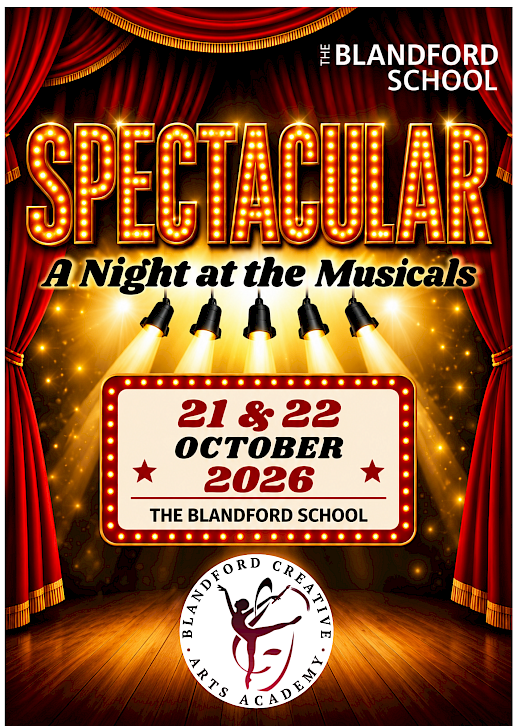
SPECTACULAR – A Night at the Musicals
Tickets are on sale now!
Join us for SPECTACULAR – A Night at the Musicals on Wednesday 21 and Thursday 22 October 2026.
Featuring performances from The Greatest Showman, Mary Poppins, Little Shop of Horrors, Annie, The Lion King, Matilda, Hamilton and more.
Don’t miss what promises to be a fantastic evening of music, dance and performance.
Relationships, Sex and Health Policy
RELATIONSHIPS, SEX AND HEALTH POLICY
|
Reviewed by SLT |
June 2026 |
|
Ratified by Governors |
February 2023 |
|
Effective from |
February 2023 |
|
Review scheduled for |
Spring 2027 |
|
Responsible Person |
The Assistant Headteacher (DSL and Personal Development) |
|
1. Status Statutory |
|
2. Purpose Relationships, Sex and Health Education (RSHE) is a partnership between home, school, health agencies and the community. Students need to be given appropriate knowledge, attitudes, values and skills, in the context of a positive and caring environment. Relationships, Sex and Health Education promotes lifelong learning about physical, sexual, moral and emotional development, including marriage and other stable, loving relationships. It also includes the teaching of sex, sexuality, and sexual health. The curriculum is inclusive and age-appropriate, supporting understanding of different relationships and promoting respect for diversity, including LGBT+ identities. Relationships, Sex and Health Education (RSHE) is delivered largely through the PD curriculum but some input will exist through Science lessons and discrete lessons off timetable. RSHE is an entitlement for all children and young people regardless of gender or ethnicity. |
|
3. Who/what should be consulted? Staff, students, parents/carers, governors, health workers and government policy have all influenced the content of this policy. Key references are:
|
|
4. Relationship to other policies: Relationships and behaviour policy Attendance Policy Curriculum Policy Children’s Safeguarding Policy. Keeping Children safe in Education (latest version). Single Equality Policy Confidentiality Policy Anti-Bullying Policy Drugs Education Policy Inclusion Policy The policy and resulting content will also be referenced to the schemes of work of Science and other curriculum areas not covered in the Personal Development programme. |
|
5. Roles and responsibilities of Headteacher and governors
It is the responsibility of the Headteacher and Governors to determine Relationships, Sex and Health Education in school and to ensure that suitable materials and images are used which are appropriate for the age and cultural background of students. It is compulsory for all maintained schools to teach the biological aspects of sex education covered in National Curriculum Science. |
|
6. Roles and responsibilities of subject teachers and all other members of staff involved in providing Relationships, Sex and Health Education All staff involved in delivering Relationships, Sex and Health Education (RSHE) are responsible for: 6.1 Working in partnership with parents/carers, recognising them as primary educators, and communicating effectively where appropriate. 6.2 Challenging myths, misinformation and harmful stereotypes with accurate, evidence-based information. 6.3 Teaching correct and appropriate anatomical terminology and promoting positive, respectful attitudes towards the body and its functions. 6.4 Delivering clear, age-appropriate and inclusive information, adapted to meet the needs of all learners, including those with Special Educational Needs and Disabilities (SEND), ensuring all students can access the full RSHE curriculum. 6.5 Creating a safe, respectful and inclusive learning environment where students feel confident to ask questions and discuss sensitive issues appropriately. 6.6 Promoting understanding of different types of families and relationships, including stable, loving relationships, and the importance of care, respect and shared responsibility. 6.7 Supporting students to understand diversity, including sexual orientation and gender identity, and challenging gender stereotypes in a respectful and inclusive way. 6.8 Developing students’ ability to recognise, avoid and seek help in situations involving exploitation, abuse or coercion (including online). 6.9 Teaching students about personal boundaries, bodily autonomy and consent, including how to communicate and respect boundaries. 6.10 Signposting students to appropriate sources of help, advice and support, both within school and externally. 6.11 Supporting students’ emotional wellbeing by normalising discussion of feelings and promoting confidence, reducing stigma, shame or anxiety where appropriate. 6.12 Developing students’ understanding of relationships, parenting and the responsibilities associated with raising children. 6.13 Promoting positive attitudes and skills for future roles and responsibilities, including parenting and caring for others. 6.14 Addressing all forms of bullying, discrimination and harmful behaviour (including homophobic, biphobic and transphobic bullying, sexual harassment and relationship abuse), and promoting respectful relationships. 6.15 Providing accurate, age-appropriate information about HIV and sexually transmitted infections (STIs), including prevention and support. 6.16 Teaching online safety within relationships, including:
6.17 Encouraging responsibility, respect for self and others, and informed decision-making. 6.18 Supporting students to recognise risk and build protective strategies, particularly for those who may be more vulnerable. 6.19 Promoting strategies that support positive mental health and wellbeing, including links to physical health, healthy lifestyles and risk awareness (e.g. substance use). 6.20 Providing education on puberty (including menstruation), physical health, illness prevention and basic first aid.
7. ORGANISATION OF SCHOOL RELATIONSHIPS, SEX AND HEALTH EDUCATION The broad outline of topics covered is outlined in Appendix 1. It is the responsibility of PD /Science teachers and Heads of Year to adhere to the following guidelines in their delivery of Relationships, Sex and Health Education:
7.1 Methodology and Approach Relationships, Sex and Health Education is approached in its broadest sense of interpersonal relationships, not just in its biological sense. The programme is underpinned by regard for young people's positive self esteem and the ability to approach life in an assertive, confident manner. At all times young people will be encouraged to be sensitive and to show respect for themselves and for others. Teachers will work within an agreed values framework in the knowledge that sexual relationships involving pupils under 16 are a criminal offence. Staff will receive training and support where this is required.
7.2 Controversial topics. There may be occasions when material of a controversial or explicit nature is dealt with; this will be approached by specialist staff in a manner sensitive to the current needs of the class and in the context of stable and loving relationships. The students are entitled to this provision.
7.3 Monitoring and Review. Meetings are held with the appropriate staff to review effectiveness of the programme and the materials used, as well as to share good practice. Annual evaluations are completed with students to ascertain effectiveness and relevance of the programme. 7.4 Liaison with parents/carers. Parents/carers will be made aware of the Relationships, Sex and Health Education Programme. The outline will also be available on the school’s website. Access to health professionals for an information and guidance session will also be offered to parents/carers at a key point in the students’ development. 7.5 Resources. Resources are selected from a wide range of materials which have been chosen because they have proved successful in previous years and/or have been recommended by health advisers.
7.6 Involvement of Health Professionals/Visitors Some lessons in the scheme of work may be taught by the Young People’s Health Practitioner (School Nurse) or other suitably qualified persons. We will only invite Health professionals or visitors into education sessions if we are confident that they share our views on how the programme should run. We would seek to have prior discussions in order that any work they do complements our own. Health professionals who attend drop-in sessions will liaise closely with the Assistant Headteacher (DSL and Personal development) and with the Student Support Worker.
7.7 Contraceptive Advice and Referrals to Under 16s 7.71 Whilst information on contraception is given in lessons, no student is given advice on an individual basis by teaching staff. Teachers are nothealth professionals, but should a student seek advice on contraception or other aspects of sexual behaviour, staff will assess each student in line with Fraser guidelines and wherever appropriate help and encourage the student to seek advice from parents/carers, seeking advice from the relevant health service professionals (General Practitioner, School Nurse or Young Person’s Care coordinator) together with other professionals and agencies as needed. The Student Support Worker and Sixth Form Administrator are trained to distribute condoms via the Dorset C-Card scheme, should this be requested. If any member of staff is in doubt, advice should be sought from the Student Support Worker, Heads of Year, Assistant Headteacher (Personal Development) or the Headteacher, in line with the Children’s Safeguarding Policy. Confidential health advice may be appropriate where it is in the young person’s best interests 7.72 If a teacher is led to believe that the young person has embarked upon, or is contemplating, a course of conduct which is likely to place them at risk of harm, or in breach of the law, the teacher has a responsibility to ensure that the young person is aware of the implications and is urged to seek advice as above. The teacher must inform the Designated Safeguarding Lead through a report to My Concern 7.8 Confidentiality Ground rules should be established in the classroom at the start of any work in this area, so that students and staff are clear as to what will be dealt with confidentially. Teachers may wish to explain that in certain circumstances e.g. as listed above, or in cases where Child Protection is at stake, confidentiality cannot be guaranteed. Staff should always pass such information to the school’s Designated Safeguarding Lead or deputy. Sensitive information is only disclosed internally or externally with careful attention to students’ rights and needs and in accordance with the appropriate legislation. 7.9 Children’s Safeguarding Procedure The Designated Safeguarding Lead (DSL) and DDSLs are trained in Children’s Safeguarding as is the Student Support Worker. All teachers know how to report concerns to the Safeguarding team.
7.10 Child Withdrawal Procedures Any parents/carers wishing to withdraw their child from sex education should inform the school in writing of their intentions. We will seek to discuss such a request with parents/carers and would hope that all parents/carers would appreciate the value and care behind the school's sex education programme. Parents do not have the right to withdraw students from relationships education or the element of the national Science Curriculum where reproduction is taught. 7.11 Anti-Bullying Procedures These are as documented in the staff handbook and the student's homework diary. They are also available on the school’s website.
7.12 Complaints Procedures Complaints should be dealt with through the complaints procedure. 7.13 Procedures for supporting any members of the School Community infected or affected by HIV/Sexually Transmitted Infections (STIs) Such procedures will be as advised by the Health Authority and by the Local Authority.
Appendix 1 Relationships, Sex and Health Education programme content The Blandford School Subject Content – Relationships, Sex and Health Education All Year group follow the Unifrog PSHE curriculum during tutor time PD once per week, with additional units and targeted resources during 8 additional PD sessions throughout the year |
|
|
|
Curriculum content
Year 7,8 and 9
As part of the Science courses human reproductive anatomy and physiology is developed. The course in PD considers associated issues of personal development, emotional health and contraception.
In Year 7 the topic is called Reproduction and covers the anatomy of male and female reproduction organs, sexual reproduction including fertilisation, puberty and the menstrual cycle.
In Year 8 the topic is called Fit and Healthy and covers the biological risk of drinking alcohol and smoking cigarettes and also includes an introduction into the different categories of drugs.
In Year 9 the GSCE specifications are followed, included in the Biology topic is a study of the respiratory system and related smoking diseases and included in the study of the circulatory system are the risk factors associated with coronary heart disease.
Years 10 and 11
In Yr10 Science GCSE all students will study a module entitled Homeostasis which introduces the control of human fertility and provides an opportunity to review the anatomy of the female reproductive system and the hormones that control the menstrual cycle.Infertility treatments, IVF and contraceptive methods are also studied from the Biological viewpoint.
In year 11, different types of reproduction are studied but with less focus on humans.
Throughout the Religious Education course, the topics of abortion and human sexuality are covered from a religious perspective.
Those pupils choosing Child Development as an option will cover work related to parenthood and pregnancy in greater detail.
The PD course looks at contraception, STIs, emotional development, relationship education, testicular and cervical cancer.
Post 16
Post 16 students have access to several workshops in the tutorial programme; these cover areas such as sexual health, testicular cancer, contraception and relationships. These may sometimes be optional, but tutors will encourage students to attend workshops appropriate to their individual needs.
Students of Biology study the process of meiosis and how sexual gametes (sperm and egg are formed).
Health and Social Care students study a diverse range of health care needs and services.